
“If angels could be jealous of men, it would be for one reason: Holy Communion.”
– St. Maximilian Kolbe
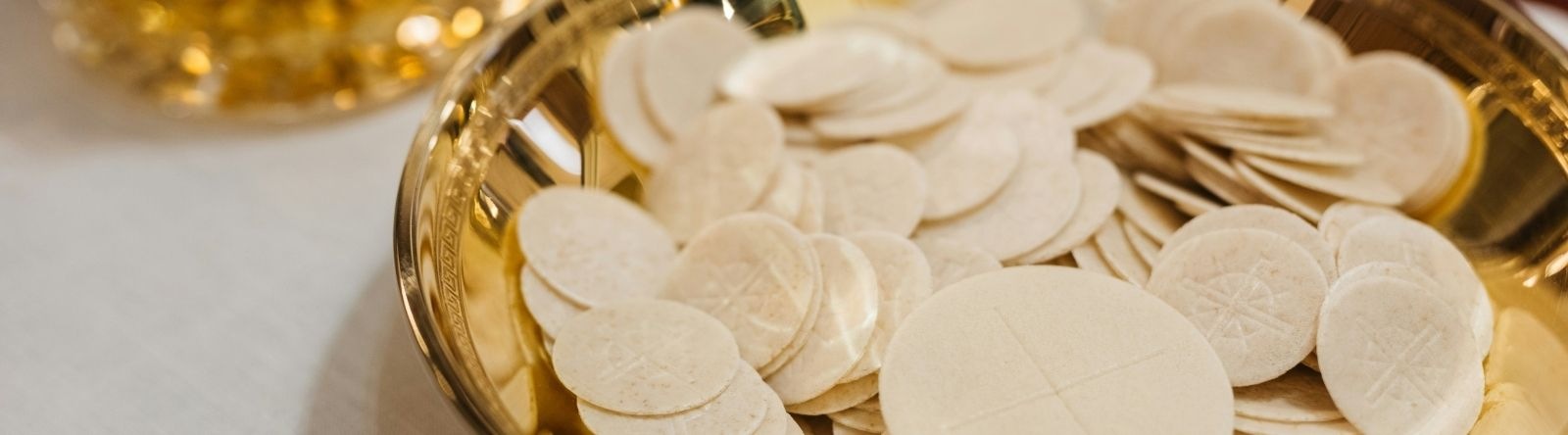
The Holy Eucharist, also known as Holy Communion, is the Body, Blood, Soul, and Divinity of our Lord and Savior, Jesus Christ. As Catholics, we believe that Jesus is truly present in the Eucharist—not merely as a symbol, but truly and substantially present.
At CCBN, in accordance with the teachings of the Roman Catholic Church and the Diocese of Buffalo, Holy Communion is ordinarily received by Catholics and members of Churches in full communion with the Catholic Church, including Eastern Catholic Churches.
Children who have been prepared to receive their First Holy Communion typically begin receiving the Eucharist around second grade.
Jesus Is Truly Present
The Eucharist is at the heart of the Church's life. At every Mass, we are nourished by the Word of God and by the Body and Blood of Christ.
Through the power of the Holy Spirit and the ministry of the ordained priest, the bread and wine become the Body and Blood of Jesus Christ. The Church calls this profound mystery transubstantiation.
“By the consecration the transubstantiation of the bread and wine into the Body and Blood of Christ is brought about. Under the consecrated species of bread and wine Christ himself, living and glorious, is present in a true, real, and substantial manner: his Body and his Blood, with his soul and his divinity.”
— Catechism of the Catholic Church, 1413
When we receive Holy Communion, we receive Jesus Himself. The Eucharist unites us more deeply with Christ and with one another as members of His Body, the Church.
The New Covenant
“I am the living bread that came down from heaven; whoever eats this bread will live forever… Whoever eats my flesh and drinks my blood has eternal life… and remains in me and I in him.”
— John 6:51, 54, 56
The Eucharist was instituted by Jesus at the Last Supper. There, Jesus took bread and wine, blessed them, broke the bread, and gave them to His disciples. He identified the cup as the “blood of the covenant” and spoke of the “new covenant in my blood.”
The Eucharist fulfills the covenant God established with His people throughout salvation history. At the Last Supper, Jesus anticipated the sacrifice He would offer on the Cross. Through His death and Resurrection, Christ established the New Covenant and opened the way for all the baptized to enter into a new and lasting relationship with God.
At every Mass, we participate in this great mystery of Christ's saving sacrifice and celebrate His victory over sin and death.
Receiving Holy Communion
The Church warmly encourages the faithful to receive Holy Communion when they participate in Mass, provided they are properly disposed to receive.
Those who have received their First Holy Communion and are in a state of grace are welcome to receive the Eucharist. Anyone conscious of having committed a mortal sin should first receive forgiveness through the Sacrament of Reconciliation before receiving Holy Communion.
“Anyone who desires to receive Christ in Eucharistic communion must be in the state of grace. Anyone aware of having sinned mortally must not receive communion without having received absolution in the sacrament of penance.”
— Catechism of the Catholic Church, 1415
The Church teaches that receiving the Eucharist strengthens our relationship with Christ, deepens our unity with one another, and gives us the grace to live more fully as His disciples.
“The Church warmly recommends that the faithful receive Holy Communion when they participate in the celebration of the Eucharist; she obliges them to do so at least once a year.”
— Catechism of the Catholic Church, 1417
Understanding the Mass
The Mass is the central act of worship of the Catholic Church. Through the liturgy, we enter more deeply into the mystery of Christ's death and Resurrection. We hear God's Word, offer ourselves to Him, and receive Christ in the Eucharist.
The Mass has two principal parts:
The Liturgy of the Word
We gather as God's people and listen to His Word proclaimed in Sacred Scripture. We respond through the Responsorial Psalm, listen to the Gospel and homily, profess our faith, and offer our prayers for the Church and the world.
The Liturgy of the Eucharist
We bring forward bread and wine, along with the offering of our own lives. Through the power of the Holy Spirit and the ministry of the priest, the bread and wine become the Body and Blood of Christ.
We then receive Jesus in Holy Communion, giving thanks for His presence and renewing our commitment to follow Him.
At the conclusion of Mass, we are sent forth to live what we have celebrated—to carry the love of Christ into our families, our workplaces, our neighborhoods, and the world.
The word Mass comes from the Latin missa, meaning “sent.” We do not simply leave Mass; we are sent as disciples to proclaim the Gospel and share Christ's love with others.
Liturgy of the Eucharist
The Eucharist is the source and summit of the Christian life. In the Eucharist, Jesus gives Himself to us completely—inviting us into deeper communion with Him and sending us forth to love and serve others.
Come, worship with us. Come, receive Christ. Come, and be transformed by His love.
For more information about receiving Communion, First Communion preparation, or Homebound Ministry visits, please contact the parish office.